THE SUSTAINABLE DEVELOPMENT GOALS AND THE BUILT ENVIRONMENT
- Pierrette Kalombo
- Feb 24, 2024
- 4 min read


(Source: www.pinterest.com )
Introduction
The population is growing at a higher rate comparing to the resources. There are some theories which explain the relationship between resources and population dynamics such as the Thomas Malthus theory and Ester Boserup theory. In 2015, the United Nations launched the Sustainable Development Goals (SDGs) which replaced the Millennial Development Goals (MDGs). Unlike the MDGs the SDGs are more detailed with 17 global goals and 169 targets. The SDGs which are supposed to be achieved in 15 years, address some of the issues which the MDGs failed to address such as environmental degradation, inequality, weak institutional capacity and unsustainable consumption behavior in society. They also look at different sectors such as the built environment.
Here is a list of the Sustainable Development Goals in short;
Goal 1. No poverty
Goal 2. Zero hunger
Goal 3. Good health and well-bein
Goal 4. Quality education
Goal 5. Gender equality
Goal 6. Clean water and sanitation
Goal 7. Affordable and clean energy
Goal 8. Decent work and economic growth
Goal 9. Industry, innovation and infrastructure
Goal 10. Reduced inequalities
Goal 11. Sustainable cities and communities
Goal 12. Responsible consumption and production
Goal 13. Climate action
Goal 14. Life below water
Goal 15. Life on land
Goal 16. Peace, justice, and strong institutions
The Built Environment and the SDGs
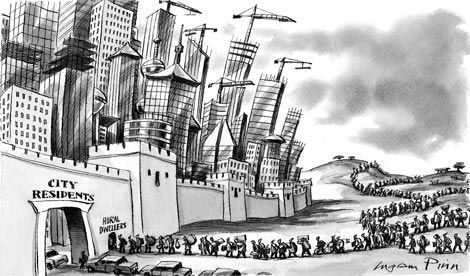
The built environment is one of the important areas which the United Nations have set strategies for sustainable development. It is where man-made structures are, such as buildings, roads, parks, bridges, utility infrastructure and many other infrastructure that enables people to work, live and interact. The built environment looks at the social, physical and economical aspects in human life. The rate of urbanization is increasing especially in developing countries, and this is mainly due to natural increase and rural-urban migration in hope of finding better opportunities in the urban areas. As the number of people in the urban areas increase, it is important to look at how resources in these urban areas can be used sustainably in order to serve the population. Therefore the Sustainable Development Goals have some targets that look at how the environmental, social and economic aspects in the built environment can be used sustainably.
SDG 11
The main goal that looks at the built environment is Goal 11, to make cities and human settlements inclusive, safe, resilient and sustainable. Cities have impacts on the natural environment and the natural environment also has an impact on cities. In order to minimize and control the negative impacts, the SDGs has targets that look at different sectors in the built environment. For example, target 11.1 talks bout the housing sector, target 11.2 talks about the transportation sector, target 11.4 talks bout cultural and natural heritage, and target 11.7 talks about green spaces. These targets and other targets under SDG 11 address social, environmental and economic aspects. The built environment is not only tackled in SDG 11 but is also addressed in other goals such as Goal 6, 9 and 13. The Sustainable Development Goals are interconnected and do not stand on their own because implementation of some one goal can lead to the achievement of another. For instance, achieving Goal 11, the people will also need to have access to clean water and clean energy which achieves Goals 6 and 7 respectively.
Adoption of the SDGs
The SDGs have been adopted at regional level and also at national level. At regional level, there is the African Agenda 2063, which was developed by the African Union. The African Agenda is a framework that is a roadmap for the development of African countries. It has 7 aspirations which describes where Africa wishes to be, it also has action plans and enablers for the implementation and achievement of its goals. Countries in the United Nations are working on how they can achieve the Sustainable Development Goals which they are signatory to. Malawi, has a long term development strategy called Malawi's Vision 2063, which incorporates the SDGs and the Agenda 2063. The long term strategy has three pillars; Agricultural Productivity and Commercialization, Industrialization and Urbanization, and it also has seven enablers for the achievement of Vision 2063.
Malawi has also development a development strategy for the first 10 years on the implementation on Vision 2063 called The Malawi 2063 first 10-year implementation plan. The plan has priority strategies and interventions and flagship projects and programs that are important for the implementation of the plan. In regards to the built environment, the 10-year implementation plan has set a plan for the development of secondary cities. The Malawi Secondary Cities plan will develop eight cities across the regions of the country. Each city is chosen on its potential for economic growth and with the goal to diverge the population from the four main cities to the secondary cities. These development plans are inline with SDG 11 and its targets by planning on developing infrastructure and cities that will be inclusive and sustainable.
Conclusion
The Sustainable Development Goals development by United Nations have 17 goals and 169 targets which have been adopted by countries in the UN. The goals address different sectors including the Built Environment which looks at the man-made structures which enables people to work, live and interact. The SDGs and inter-connected, where implementation of one goal can lead to the achievement of the others. However, SDG 11 is more applicable to the built environment, but also works with other goals such as SDG 13. The SDGs have been adopted at regional and national level. Malawi as a nation has developed a long term development strategy and has some development plans with projects and programs.
The above information just gives an overview of what the SDGs and the Built environment are about. Specific examples shall be given in the next posts to come.

Why does it seems like most of these Agendas are forcely adopted by most of the nations more especially here in Africa, and we Africans, are still adopt them disregarding our limited capacity?